
"coffee taste development"
20000 article(s) found

Boutique Coffee Brand Old Street Field White Coffee Development History
Old Street White Coffee originated from Malaysian coffee, including plain white coffee, hazelnut flavor and brown sugar flavor. White coffee is a specialty of Ipoh Old Street in Malaysia, which has a history of nearly 100 years. White coffee is roasted at low temperature without caramel, removing the bitter and sour taste produced by high temperature carbon roasting, minimizing the bitter and sour taste of coffee, and retaining the natural flavor and strong flavor of the original coffee.

Scientists studying coffee genes may help to develop improved varieties.
An international research team released a genetic map of coffee on September 4th, saying it would help improve the taste of the world's most popular drink. According to Hong Kong's Oriental Daily on September 5, the genetic map could help scientists develop stronger varieties of coffee plants with better quality and resistance to drought. Rahimi, a researcher at the French Institute for Development Research, said the findings could be

What is the boutique coffee in China, the development history of Yunnan coffee, is Yunnan coffee beans delicious?
Yunnan, as the main coffee producing area in China, what special flavor does it have? In recent years, Yunnan coffee beans stand out in the raw bean competition and become a group of dark horses to enter the boutique coffee market, so what is the unique charm of Yunnan coffee? What kind of story does it have? The first Yunnan coffee beans were introduced by Tian Deneng, a French Catholic missionary, via Vietnam in 1904.

The Development of Kopi Luwak Culture Coffee Musk Coffee
M.P. Mountanos, which first introduced Kopi Luwak coffee to the United States in the course of development, pointed out that at first, when I heard about this kind of coffee fermented in the body, I thought it was a joke in the industry, but I didn't take it seriously. later, I saw a special report on Kopi Luwak in National Geographic Magazine and became interested in her. it took seven years to find a stable source of supply and began to quote in a small amount.

A brief introduction to the History and Culture of the Origin and Development of Fine Coffee beans in Los Congo Manor
Beautiful sour taste, moderate mellow Nicaraguan coffee belongs to the Central and South American style coffee, although the acidity is not very high, but it feels refreshing. The mellow degree is also not high, but the overall feeling is just right, neither thin nor too strong. To make it easier to accept. The taste of red wine can be vaguely felt in the shallow sour taste, which is also a major feature of Nicaraguan coffee.

Looking forward to the development trend of coffee in China
1. Great potential for the development of the domestic coffee market after China's entry into WTO, China's economy is developing rapidly, people's living standards are constantly improving, and coffee is being accepted by more and more Chinese. Coffee is no longer just a drink, it is gradually closely linked with fashion and taste, or make friends and talk, or business talks, or leisure, in a cup of coffee filled with music.

A brief introduction to the Origin, Development, History and Culture of Katim Fine Coffee beans suitable for Deep Baking
Catimor: in 1959, the Portuguese mixed Brazilian Kaddura and Timo to develop a disease-resistant Katim / Katimo, which is now an important variety of commercial beans. Coffee is a short-day plant. Coffee has the characteristics of multiple flowering and concentrated florescence. The florescence of small seed coffee in Yunnan is 27 months, and the flowering period is 35 months. The flowering of coffee is affected by the climate, especially the rain

Scientists develop caffeine doughnuts to eat exciting without bitterness.
Scientist Bohan Ron developed caffeine doughnuts. Scientist Bohan Ron ate an exciting doughnut with coffee sugar coating in his hand. according to foreign media reports on January 30, a molecular scientist who is also the owner of a coffee shop has developed a way to add caffeine to baked goods that do not have the natural bitterness of coffee itself. Develop this caffeine diet

A brief introduction to the history and culture of the origin and development of high-quality coffee beans
Link: http://www.coffeereview.com/review.cfm?ID=2928 Hachira N2 L12 Inspired by the Ninety Plus Aricha selections developed with S.A. Bagersh from 2006-2008, Hachira coffees are juicy and floral, commonly with concentrated elderberry to bla

Coffee Culture in the History of Coffee Culture Development in France and China
China in China, people like drinking coffee more and more. The coffee culture that follows is full of every moment of life. People are tasting coffee at home, in the office, or on various social occasions: it is gradually associated with fashion and modern life. Coffee houses everywhere have become good places for people to talk, listen to music and rest, and coffee has gradually developed into a kind of literature.
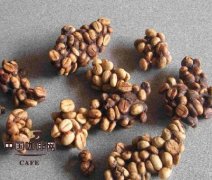
The Development of Fine Coffee Common sense Musk Coffee
Course of development: Kopi Luwak first introduced Kopi Luwak coffee to the United States (M.P. Mountanos) pointed out that when I heard about this kind of coffee fermented in the body, I thought it was a joke in the industry, but I didn't take it seriously. Later, when I saw a special report on Kopi Luwak in National Geographic, I became interested in her, and it took seven years to find a stable source of supply.

The Development History of Coffee in China-- an introduction to the Cultural process
The Development History of Coffee in China-- introduction to the Cultural process with the popularity of coffee, a drink with a long history, coffee is being accepted by more and more Chinese people. Some data show that China's coffee consumption is increasing year by year, and is expected to become an important coffee consumer in the world. Today, Yunnan coffee produced in China's own land, with its noble quality, low-cost

A brief introduction to the History and Culture of the Origin and Development of Fine Coffee beans in Los Congo Manor in Central America
Beautiful sour taste, moderate mellow Nicaraguan coffee belongs to the Central and South American style coffee, although the acidity is not very high, but it feels refreshing. The mellow degree is also not high, but the overall feeling is just right, neither thin nor too strong. To make it easier to accept. The taste of red wine can be vaguely felt in the shallow sour taste, which is also a major feature of Nicaraguan coffee.

Japanese companies develop new coffee treatment methods, frozen aging treatment to improve aroma and taste
The key coffee confirmed that the number of raw coffee beans increased after the picked coffee cherries were aged on ice for 15 days, and their flavor and flavor were also improved by roasting them. It was announced at the National Ice temperature Research Conference that the company has developed a key post-harvest processing technology that makes use of this effect. Ice-temperature aging is done by storing food before it freezes.

Hand-made Coffee | hand-made Coffee in Qianjie Autumn | blending Coffee and roasting
Professional coffee knowledge exchange more coffee bean information please follow the coffee workshop (Wechat official account cafe_style) recently more than half a month of debugging and data collation, we are concentrating on research and development [autumn hand matching], let's share with you our achievements so far ~ [flavor qualitative] at the beginning of research and development, we first need to determine what autumn proposition should express.

A brief introduction to the history and culture of the origin, development and development of Yega Shifeiwaka boutique coffee beans
Yega Chuefei exudes an extremely complex aroma and shows an extremely excellent taste that is difficult to describe. In general, the dry aroma of Yega Chuefei is full of fruit, with strong aromas of dried fruit, strawberry, mango and apricot jam. Wet fragrance is like sweet syrup, like sticky apricot juice, wrapped in plain honey or chocolate. The entrance is not strong and the alcohol is thick.

A brief introduction to the History and Culture of the Origin and Development of Vietnamese Fine Coffee beans
At present, the development plan of coffee industry in Vietnam is adjusting its strategic direction according to the following main contents: 1. Change the planting structure and determine the strategic goal of industry development. Reduce the planting area of ROBUSTA coffee and turn the land with low efficiency in coffee cultivation into other perennial cash crops such as rubber, pepper, fruit trees and annual crops such as cotton and hybrid corn. In conditional land

Is Columbia Medellin Coffee good? Colombia Medellin's characteristic coffee beans taste
Professional coffee knowledge exchange more coffee bean information follow Coffee Workshop (Wechat official account cafe_style) Coffee News Medellin Coffee News Coffee farmers and industry stakeholders from more than 40 countries will share a shared responsibility to address the challenges of the sustainable development of the coffee value chain. Executive Director of the International Coffee Organization (ICO) and Prime Minister of Colombia

A brief introduction to the History and Culture of the Origin and Development of Costa Rican Yerzaro Coffee
Natural resources include iron, manganese, mercury, bauxite, gold and silver, among which the reserves of bauxite, iron and coal reach 150 million tons, 400 million tons and 50 million tons respectively. The recent situation is mainly distributed in the central gold belt area of the northwestern Tilaran Cordillera Mountains. Calcium carbonate is distributed in the northwest and has high taste. The purity of calcium carbonate extracted from limestone can reach 99.5%. Brother
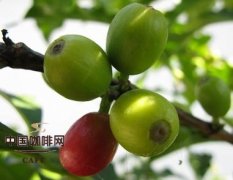
History of Coffee Development in China
According to historical records, planting in Taiwan was successful for the first time in 1884. Since then, coffee trees have been planted in China. Coffee planting in Daliu began in Yunnan Province. In 1902, a French missionary named Tian introduced seeds from India and Gong, and planted them successfully in Binchuan County, Yunnan Province, located in Zhukula, a tributary of Jinsha River. Commercial cultivation of Yunnan coffee began in 1985, but the development was slow.